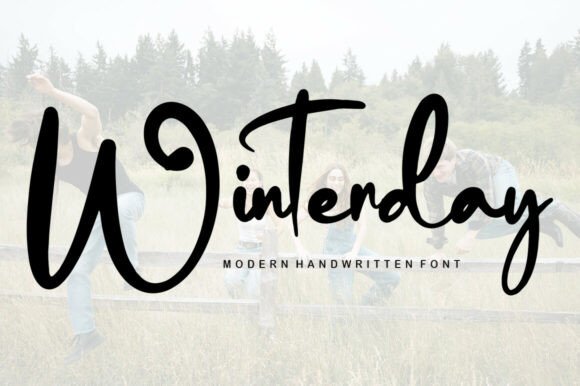
Winterday: A Handwritten Font That Balances Elegance and Flow
There’s a particular quality in a handwritten font that feels both personal and polished. It doesn’t scream for attention, but it holds your gaze. Winterday is that kind of typeface—a delicate, flowing script with characters that feel carefully considered rather than casually drawn. Each letter connects with a natural rhythm, creating a visual texture that’s easy to read and surprisingly versatile. If you’ve been searching for a font that bridges the gap between artistic flair and practical use, this might be the one you didn’t know you needed.
More Than Just Pretty Letters
What sets Winterday apart is its balance. Many script fonts lean too far into whimsy, sacrificing legibility for style. Others feel stiff, losing the warmth that makes handwriting appealing in the first place. Winterday navigates this with well-proportioned characters and a consistent baseline. The strokes vary gently, mimicking the pressure changes of a real pen, but without becoming erratic. This makes it suitable for both display sizes and smaller text applications where clarity still matters.
Think about a wedding invitation, a product label, or a social media quote. In each case, the font needs to convey a specific mood while remaining functional. Winterday’s elegance doesn’t overwhelm the message; it supports it. The flowing connections between letters create a sense of continuity, which can be particularly effective for brands aiming to appear approachable yet refined.
Where This Font Truly Shines
Practical application is where Winterday proves its value. Let’s break down a few scenarios where this typeface can elevate your work without complicating your workflow.
Branding and Logo Design: For businesses in lifestyle, beauty, wellness, or creative services, a handwritten font like Winterday can add a human touch to a logo. It suggests craftsmanship and care—qualities that resonate with audiences looking for authenticity. Pair it with a clean sans-serif for body text, and you have a brand identity that feels both personal and professional.
Packaging and Merchandise: Imagine a artisanal candle label, a skincare product, or a boutique coffee bag. Winterday’s delicate flow adds a premium feel without appearing pretentious. It works beautifully on packaging where space is limited, as its legibility holds up even at smaller sizes. For merchandise like tote bags or notebooks, the font can turn a simple phrase into a design feature.
Digital Content and Social Media: In a feed crowded with bold, loud graphics, something softer can stand out. Use Winterday for Instagram quotes, Pinterest pins, or blog headers to create visual cohesion across your platforms. Its readability on screens makes it a practical choice for creators who want to maintain a consistent aesthetic without sacrificing accessibility.
Editorial and Print Layouts: While not a body text font, Winterday excels in pull quotes, chapter titles, or magazine headings. It adds visual interest to layouts that might otherwise feel too rigid. For event programs, menus, or brochures, it brings an element of sophistication that engages readers immediately.
Making It Work for Your Project
Choosing a font is just the first step. Knowing how to use it effectively is what separates good design from great design. Here are a few practical considerations when working with Winterday or any similar script typeface.
Pairing with Other Fonts: A handwritten font rarely works alone in a professional context. Balance Winterday with a neutral serif or sans-serif for longer text blocks. For example, use Winterday for a headline and pair it with a font like Open Sans or Lora for paragraphs. This contrast ensures readability while maintaining visual interest.
Spacing and Alignment: Script fonts often require more attention to kerning and line spacing. Because Winterday has flowing connections, giving it a bit more room to breathe prevents the text from feeling cramped. Always preview your designs at actual size to check for readability, especially in digital formats where screen resolution varies.
Color and Contrast: The delicate strokes of Winterday can get lost on busy backgrounds or with low-contrast color combinations. Ensure your text stands out by choosing solid, simple backgrounds or using the font in areas with ample white space. Dark text on light backgrounds or vice versa tends to work best.
Licensing and Usage: Before finalizing any commercial project, verify the font’s licensing terms. Most premium fonts like Winterday include licenses for both personal and commercial use, but it’s wise to double-check if your project involves large-scale distribution or merchandise. This small step avoids legal headaches later.
A Font That Adapts to Your Vision
One of the strengths of a well-crafted handwritten font is its adaptability. Winterday doesn’t lock you into a single aesthetic. It can feel romantic for a wedding suite, modern for a startup’s branding, or artistic for a gallery’s promotional materials. This flexibility makes it a valuable asset in a designer’s toolkit—especially for those who work across multiple industries or project types.
Consider how typography influences perception. The right font can make a brand feel trustworthy, innovative, or luxurious. Winterday’s balanced elegance suggests thoughtfulness and quality, which can subtly enhance how your audience perceives your message. Whether you’re designing for a client or for your own business, this kind of nuanced communication matters.
Ultimately, fonts are tools for storytelling. Winterday offers a way to tell stories with warmth and grace, without sacrificing the practical needs of real-world design. It’s not about following trends, but about finding a typeface that serves your project’s unique voice. If that sounds like what you’re after, it might be worth exploring how this font can fit into your next creative endeavor.