Button: A Handwritten Script Font That Feels Like a Personal Note
There’s something instantly special about receiving a handwritten note. It carries a warmth and personality that a standard printed message simply can’t match. In the world of digital design, capturing that authentic, human touch is a powerful way to connect with an audience. This is where a carefully crafted script font like Button steps in, offering a bridge between the convenience of digital tools and the charm of hand-lettered elegance.
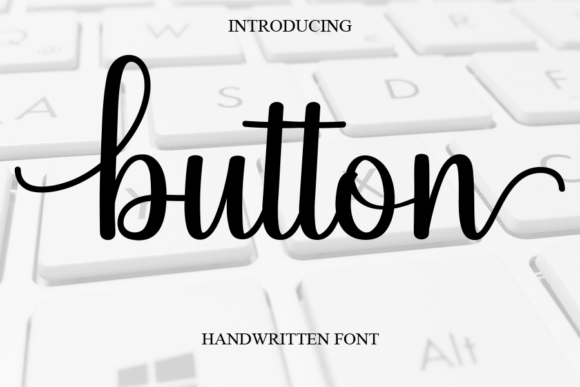
Button is a sweet, graceful, and beautifully balanced handwritten script font. Its smooth, connected letters and charming loops give it a warm, personalized touch, making it far more than just another typeface. It’s a design asset that can infuse projects with a sense of bespoke craftsmanship and approachability, perfect for when you want your work to feel personal and intentional.
The Visual Appeal of a Thoughtfully Crafted Typeface
What sets Button apart in a sea of script fonts is its careful balance. It avoids the extremes of being too formal or too casual. The letters flow into one another with a natural rhythm, creating a seamless, connected look that mimics authentic handwriting. The subtle loops and swashes add character without overwhelming the text, ensuring it remains legible and versatile.
This font’s personality is one of gentle confidence. It feels feminine and delicate, yet substantial enough to hold its own in a design. Think of it as the typographic equivalent of a beautifully wrapped gift or a thoughtfully arranged bouquet—it adds a layer of care and beauty to whatever it touches. For designers and creators, this means having a premium font in your toolkit that can elevate a project from functional to feeling truly special.
Practical Applications: From Brand Identity to Social Media
The true test of a creative font is its utility across different projects. Button excels in scenarios where warmth and personality are key. Its versatility makes it a valuable asset for a wide range of applications.
- Branding & Logo Design: For small businesses, especially those in the wedding, beauty, lifestyle, or artisanal food industries, Button can form the core of a memorable brand identity. It works beautifully for a logo, creating an immediate sense of elegance and personal service. Paired with a clean sans serif font for body text, it establishes a professional yet approachable visual system.
- Packaging Design: Imagine a line of handmade soaps, gourmet jams, or boutique candles. Using Button on labels and packaging instantly communicates that the product inside is crafted with care. It suggests quality and a human touch, which can be a significant differentiator on a crowded shelf.
- Invitations & Editorial Layouts: This is Button’s natural home. Wedding stationery, party invitations, and save-the-dates gain a romantic, personalized feel. In editorial design, such as in magazines or lookbooks, it can be used for pull quotes, chapter titles, or special features to add a touch of handwritten charm.
- Digital Presence: On social media graphics, a script font like Button can make quotes, announcements, or sale highlights stand out with a personal touch. On a website or blog, it’s perfect for accent elements like a header, a call-to-action button, or a featured quote, drawing the eye and adding visual interest without sacrificing readability in longer text.
- Merchandise & Marketing Assets: From tote bags and t-shirts to thank-you cards and promotional flyers, Button adds a bespoke quality. It makes marketing materials feel less corporate and more like a conversation with a friend, which can significantly boost audience engagement.
Enhancing Your Design with Smart Typography Choices
Choosing the right font is a strategic decision that impacts how your message is received. A script font like Button is a tool for specific jobs. Its strength lies in display use—headings, logos, and short bursts of text where its character can shine. Using it for long paragraphs of body copy would likely hinder readability. The key is to match the font style to your project’s goal.
One of the most practical skills in modern typography is learning to create effective font pairings. Button pairs exceptionally well with simple, neutral serif or sans serif fonts. A classic serif like Garamond or a clean sans serif like Montserrat can provide a stable, readable foundation, allowing Button’s expressive nature to serve as an accent. Always test your pairings together in a mock-up to ensure they create a harmonious hierarchy, not a visual competition.
Remember that readability is paramount. Consider the context: a script font on a small mobile screen requires more careful size and spacing adjustments than the same font on a large poster. Button’s well-defined letterforms help in this regard, but it’s always wise to preview your work at the intended viewing size.
Working with Your Font Assets
When you invest in a font like Button, you’re getting more than just the basic alphabet. A well-constructed font package often includes additional styles and features that expand its creative potential. Review the included files; you might find stylistic alternates—different versions of key letters like ‘b,’ ‘h,’ or ‘k’—that allow you to customize the look of your text. You may also find ligatures, which are special character combinations (like ‘th’ or ‘ll’) that connect more fluidly and naturally.
A significant practical advantage is PUA encoding. This simply means all the special characters, swashes, and alternates are easily accessible through any standard software, whether you’re using Adobe Illustrator, Photoshop, Canva, or even Microsoft Word. There’s no need for advanced design software or special plugins to unlock the font’s full decorative potential. This accessibility makes it a truly versatile creative font for professionals and hobbyists alike.
Finally, a note on licensing. Most premium fonts come with a commercial license that allows you to use the font in projects for sale, like client logos, merchandise, or digital products. Always review the license agreement that comes with your font to ensure your intended use is covered, especially if you’re working on a large-scale commercial project. This due diligence is a standard part of professional practice and protects both you and the font’s creator.
In the end, selecting a typeface is about finding the right voice for your visual story. A font like Button offers a voice that is graceful, personal, and full of charm—a valuable addition to any designer’s toolkit for projects that call for a human touch.