Rusty Typewriter: Unlocking Authentic Vintage Style
There is a specific kind of nostalgia that hits you when you hear the mechanical clatter of an old typewriter. It isn’t just about the sound; it is the feeling of permanence and effort. In an era of pristine vector graphics and flawless digital rendering, the imperfections of the past hold a distinct power. If you are a designer, a small business owner, or a creative entrepreneur looking to inject some genuine grit into your work, you need a typeface that doesn’t just look old, but feels lived in. This is where Rusty Typewriter enters the scene. It is not merely a font; it is a texture, a mood, and a story waiting to be told on your next project.
The Anatomy of Authentic Imperfection
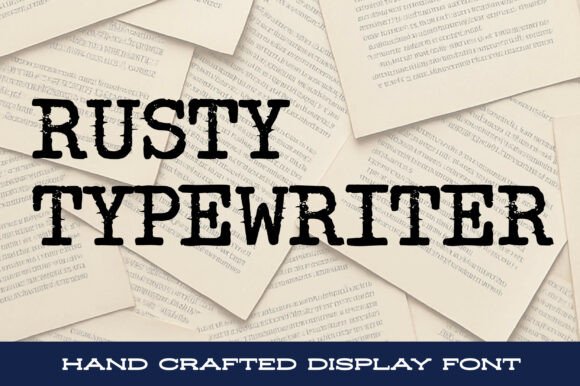
When we talk about typography, we often focus on kerning, leading, and vector paths. However, the visual appeal of Rusty Typewriter lies in its rejection of mathematical perfection. This is a gritty, vintage-inspired sans serif font that captures the charm of an analog machine. Every letter feels worn, imperfect, and authentically human. You can almost smell the dusty attic or the stale cigarette smoke of a noir detective’s office when you look at the character set.
The rough edges and uneven ink impressions aren't mistakes; they are features. In modern typography, we sometimes sanitize our designs to the point of sterility. Rusty Typewriter brings back the subtle misalignments that give text a tangible, physical presence. It looks like a page pulled from a forgotten manuscript or a decades-old police report. For designers working on mystery novels, grunge posters, or scrapbook aesthetics, this font provides an immediate analog character that digital-native fonts struggle to replicate. It adds mood and texture to every word, ensuring that your typography is doing more than just conveying information—it is setting a scene.
Practical Applications: Where Grit Meets Strategy
Understanding the aesthetic of a font is one thing, but knowing how to apply it commercially is where the real value lies. As a brand strategist, I often advise clients that typography is the voice of their brand. If your brand voice is rugged, authentic, or rebellious, Rusty Typewriter is a powerful design asset. Here is how you can practically apply this typeface across various mediums:
- Branding and Logo Design: If you are launching a craft brewery, a vintage clothing line, or an artisanal coffee roaster, your logo needs to communicate heritage. Rusty Typewriter works exceptionally well for wordmarks where you want the product to feel handmade. It pairs beautifully with a clean sans serif font for body copy, creating a hierarchy that draws the eye to the brand name.
- Packaging Design: On a shelf crowded with slick, plastic-covered products, a label that looks like it was stamped or typed on kraft paper stands out. Use this font for product descriptions, flavor names, or "Established in..." dates to reinforce the quality of the contents.
- Editorial and Book Covers: For authors and publishers, the cover is the first promise to the reader. A dystopian headline, a horror title, or a historical fiction novel benefits immensely from a typeface that looks like it has survived the events of the plot. It suggests depth and narrative weight.
- Merchandise and Apparel: T-shirts, tote bags, and hats often rely on bold graphic statements. The rugged style of Rusty Typewriter translates well to screen printing and embroidery, offering a raw, bold statement that feels truly handmade.
- Social Media and Web Design: While you shouldn't use a display font like this for long paragraphs on a website, it is excellent for hero images, pull quotes, and headers. On social media, it grabs attention in a feed full of polished, corporate graphics. It breaks the pattern, which is essential for engagement.
Strategic Pairing and Readability
One of the most common pitfalls in using a "character font" like Rusty Typewriter is overuse. If you set an entire paragraph in a distressed typewriter style, you risk sacrificing readability for the sake of style. The ink bleed and rough edges are designed for impact, not for body text. To improve your professional presentation and ensure your message lands, you need to master the art of font pairing.
Since Rusty Typewriter has a strong personality, it requires a calm, neutral partner. Think of it as a loud lead singer needing a steady rhythm section. Pairing it with a modern, geometric sans serif or a clean, legible serif font creates a necessary contrast. For example, use Rusty Typewriter for your main headline to grab attention, and then switch to a font like Roboto, Open Sans, or Garamond for the supporting text. This ensures visual consistency and readability. The contrast actually highlights the texture of the typewriter font even more, making the design feel intentional rather than chaotic.
Enhancing Audience Engagement
Why does this font style work so well for marketing assets? It comes down to psychology and engagement. We live in a high-polish digital world. We are bombarded with vector-perfect logos and smooth gradients. When a viewer sees something that looks tactile—something that looks like it was made by a human hand rather than a computer algorithm—it stops the scroll.
Rusty Typewriter triggers a sense of nostalgia. For older audiences, it reminds them of tangible history; for younger audiences (Gen Z and Millennials), it fits into the popular "cottagecore," "dark academia," or retro-grunge aesthetics. By using this typeface, you are signaling that your brand or project values authenticity. It helps build brand recognition because the texture is so distinct. People will remember the "rough" font on your poster or the "vintage" text on your Instagram graphic. It adds a layer of storytelling to your visual communication that standard corporate fonts simply cannot provide.
Technical Considerations for Creative Projects
Before you dive in, there are a few practical considerations to keep in mind to maximize the utility of this typeface. First, consider the licensing. If you are using Rusty Typewriter for a client’s logo or on merchandise that you plan to sell, you must ensure you have the appropriate commercial license. Most premium font providers offer different tiers for desktop, web, and digital products, so review the terms to avoid legal headaches later.
Next, look at the specific styles included with the font family. Does it come with bold or italic variations? Often, distressed fonts look best at their default weight, but having a bold option can be useful for sub-headlines. Check for special characters or ligatures. Some high-quality typewriter fonts include alternate characters that mimic the stuck keys or uneven ink of a real machine. Using these alternates can make your design look even more organic.
Finally, test your color palettes. Rusty Typewriter looks stunning in high-contrast scenarios—white text on a black background or black text on a cream background. It also pairs exceptionally well with earth tones, sepia, and muted pastels. Avoid neon colors or overly saturated gradients, as these can clash with the vintage aesthetic and make the text difficult to read.
Adding Soul to Your Design
Design is about communication, but it is also about feeling. You can have the best copy in the world, but if the typography doesn't match the message, the impact is lost. Rusty Typewriter is more than just a collection of glyphs; it is a tool for adding soul to your work. Whether you are designing a weathered label for a homemade jam, a dystopian headline for a sci-fi blog, or a bold creative statement for a streetwear brand, this typeface delivers.
It bridges the gap between the digital and the physical. It reminds us that behind every design is a creator, and behind every word is a human story. By incorporating this gritty, vintage-inspired sans serif into your toolkit, you aren't just choosing a font style; you are choosing to make your work memorable, tactile, and undeniably real. So, the next time your project needs a touch of nostalgic imperfection, let the keys clack and the ink bleed. Your audience will notice the difference.